“A national debt, if it is not excessive, will be to us a national blessing.”
~ Alexander Hamilton
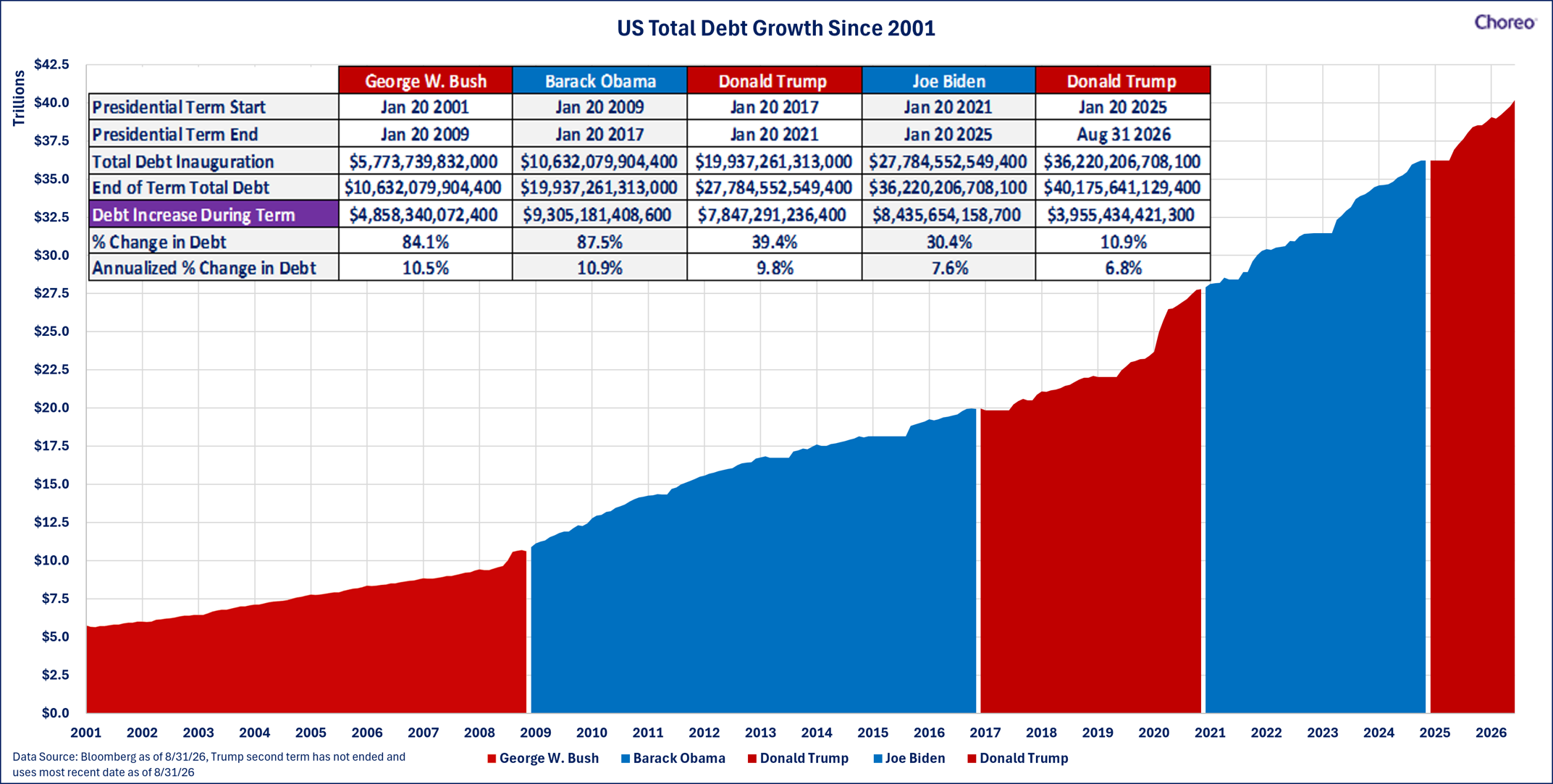
The national debt surpassed $40 trillion recently, adding $10 trillion in less than five years.
Equity markets continue brushing off headline risk, rising towards the highest levels of the year in August.
Long-term Treasury yields have touched multi-decade highs on fears about ongoing inflationary pressures, Federal Reserve actions to potentially raise rates, and the longer-term debt levels.
There are numbers that make people pause, and $40 trillion should be one of them. In August, the U.S. national debt crossed that threshold for the first time, a figure so large it can feel abstract, even though the financing costs are very real. Higher debt levels can limit future flexibility and make markets more sensitive to changes in interest rates and inflation, among other variables. These factors have not stopped the U.S. from remaining one of the most dynamic, innovative, and productive economies in the world, supported by deep capital markets, resilient businesses, and a long history of adapting through difficult periods. The important point for investors is to hold both ideas at once: the fiscal path has become more challenging, but the economic foundation supporting it remains strong.
The graph below also highlights that the rise in debt is not a new problem. It has been ongoing for many years, regardless of who is in the White House. Markets have not only absorbed the new debt, but to a degree have blossomed from the spending. The question of how much debt is too much has been at the forefront for many years, and the answer is: only time will tell.
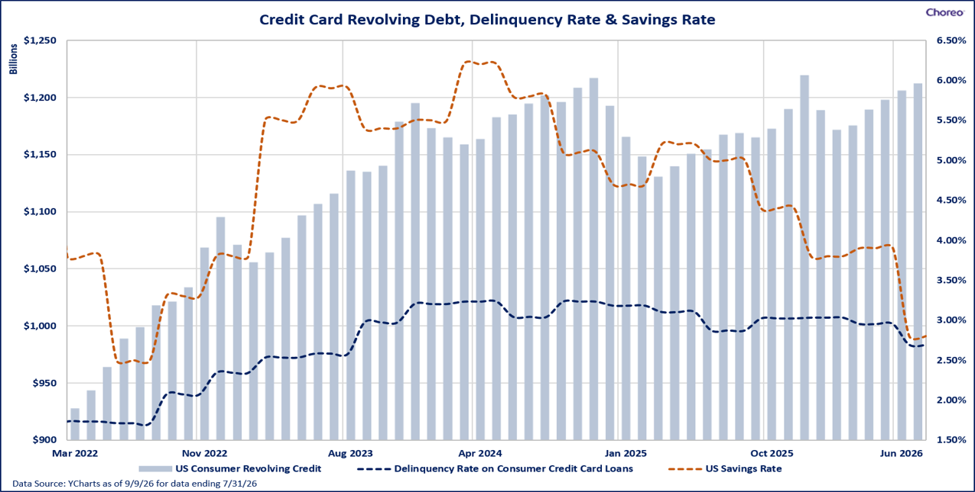
For most families, a bigger credit card balance does not automatically mean trouble, but it does force harder questions if income is not keeping up. As shown in the graph below, higher credit card debt and lower savings have not led to higher delinquencies (at least not yet). The same idea applies to the national level. The debt headline is not a reason to panic, but it is a reason to pay attention. While Federal debt levels have increased, at the same time, the U.S. economy has continued to grow, innovate, and compound through a remarkably uneven period. Since 2017, real gross domestic product (GDP) has moved meaningfully higher despite a pandemic, inflation shock, rate-hiking cycle, banking stress, and multiple rounds of political brinkmanship. Looking at both sides of the ledger is essential: the legitimate concerns tied to deficits, Washington dysfunction, and interest costs compared with the continuing strength of an economy that has proven harder to knock off course than many expected.
The Headline: $40 Trillion
By the numbers, $40 trillion is a difficult figure to internalize. What’s more, it represents roughly one-third of the increase in total debt in under five years. The pace of accumulation has become as much a part of the story as the total itself; the country now adds several billion dollars of debt each day. While the sheer dollar figure appears large, the absolute percentage increase has actually slowed in recent years. Still, a growing share of that spending is now funding interest on debt, already outstanding as shown in the graph below. Interest expense has climbed to nearly one-fifth of federal tax revenue and now exceeds the defense budget, a dynamic that was almost unthinkable a decade ago.
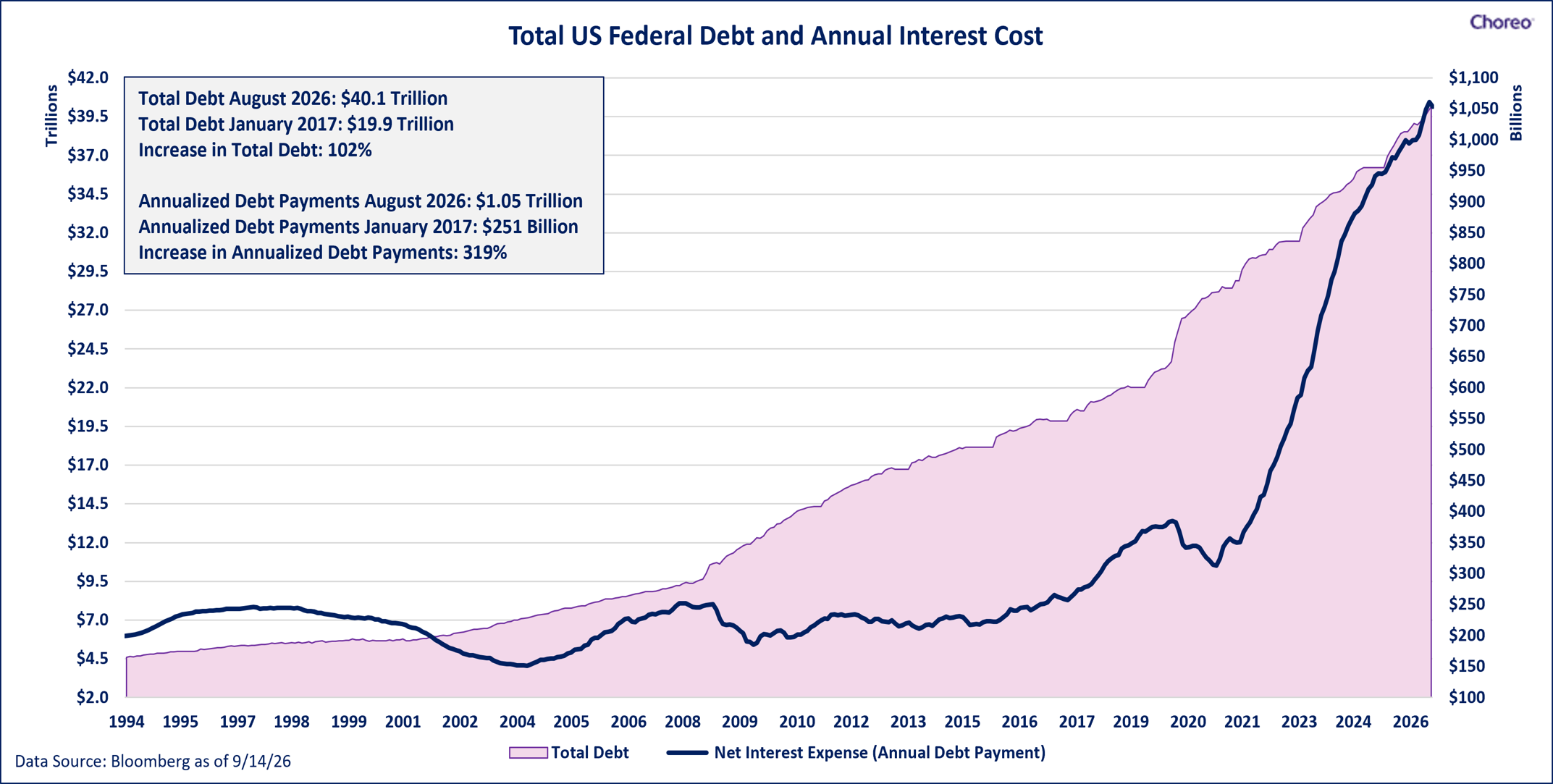
None of this happened overnight; it built gradually through years of persistent deficits, exacerbated by the COVID pandemic. The uncomfortable point is that the federal government is now borrowing heavily even outside of recession, war, or financial crisis conditions. That does not mean a crisis is imminent, but it does mean the margin for error is narrower. When interest costs consume a larger share of revenue, Washington has less flexibility to invest, respond to downturns, or absorb shocks without issuing still more debt.
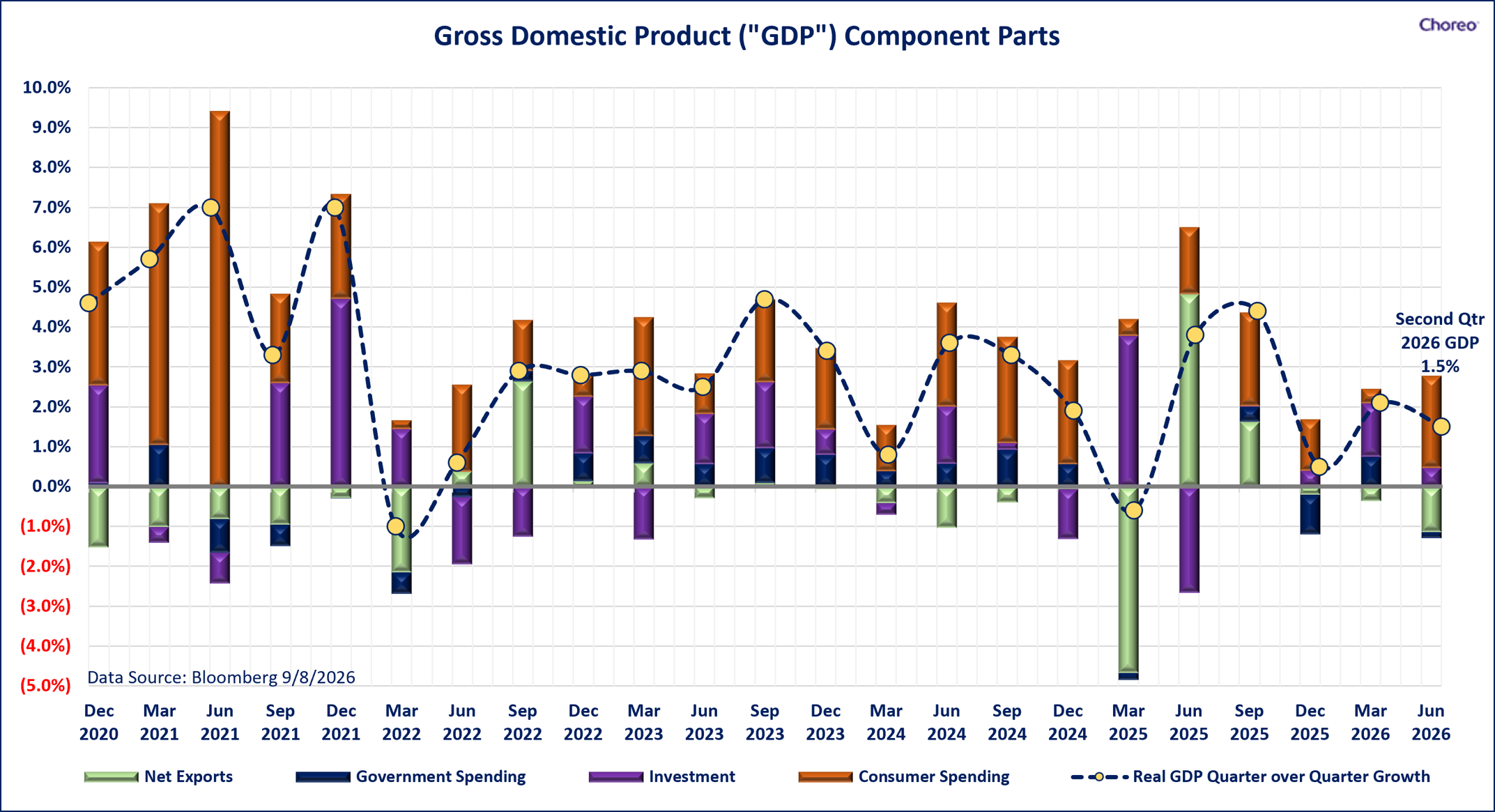
That said, debt should always be viewed relative to the size and productivity of the economy supporting it. The U.S. economy is not standing still. Real GDP increased at a 1.5% annualized pace in the second quarter of 2026 after 2.1% growth in the first quarter, with consumer spending and investment contributing to the expansion (Source: U.S. Bureau of Economic Analysis). More broadly, nominal GDP has grown from $20 trillion at the end of 2017 to $32.5 trillion at the end of the second quarter, a reminder that the economy has continued to expand even after absorbing several major shocks (Source: Bloomberg). In other words, the debt numerator has grown quickly, but the economic denominator has grown too.
The point is that a growing economy can carry more debt than a stagnant one, especially since the U.S. economy remains the center of global capital markets. GDP as shown below continues to expand at a healthy pace, offsetting some portion of the concerns.
Treasury Auctions & the Bond Market's Response
Long-dated Treasury bonds bore the brunt of investor anxiety in recent weeks. The 30-year yield touched levels not seen in nearly two decades, as buyers grew more selective about the price, they are willing to pay to finance the government’s borrowing needs. That is the practical side of deficits: they eventually have to be funded. If investors demand more compensation for lending to the government for 20 or 30 years, that higher rate may not stay confined to Washington. It can ripple into mortgages, corporate borrowing, municipal finance, and valuations across risk assets.
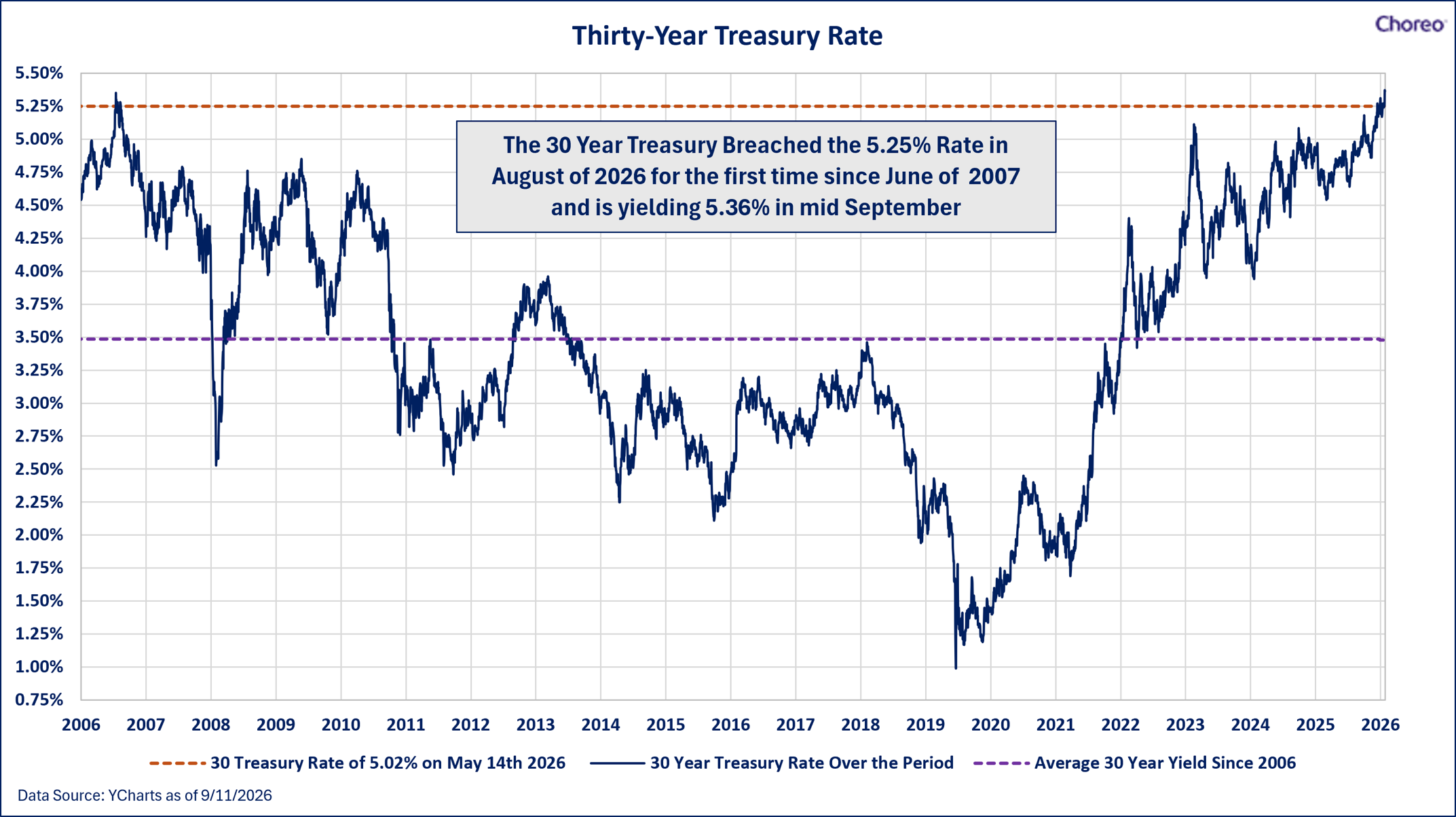
In a sign of how seriously officials are treating the move, the Treasury Department expanded the size of its buyback program for longer-dated securities. The initial market reaction was favorable as yields fell as the news hit, but the relief was short-lived. Strategists quickly pointed out that the buyback program, while helpful for market functioning, remains small relative to the amount of new issuance required to fund ongoing deficits. Diversified fixed income exposure, an emphasis on quality, and avoiding the temptation to make heroic calls on the direction of interest rates based solely on the latest Washington headline may help smooth the path forward for investors.
Washington, Deficits, and the Cost of Getting Nothing Done
The most frustrating part of the debt conversation is that very little about it is mysterious. The country has been running large deficits for some time, entitlement spending is rising as the population ages, interest costs are compounding, and Washington has not shown much appetite for the kind of tradeoffs required to bend the curve. The Congressional Budget Office (CBO) projects the federal deficit at roughly $1.9 trillion in fiscal year 2026, or 5.8% of GDP, with deficits remaining large by historical standards in the coming years. Debt held by the public is projected to rise from about 101% of GDP in 2026 to 120% by 2036.
To be clear, this is not a prediction that the United States is about to lose its role at the center of the global financial system. The dollar remains dominant, Treasury markets remain the deepest in the world, and the U.S. continues to benefit from extraordinary advantages in innovation, demographics relative to many developed peers, energy production, higher education, entrepreneurship, and capital formation. Those advantages should be protected.
Growth Still Matters
Over the last decade, the U.S. has endured a remarkable list of challenges: a global pandemic, supply-chain disruptions, the fastest inflation in decades, the most aggressive Fed tightening cycle in a generation, a regional banking scare, wars abroad, and repeated budget fights at home. Through it all, real GDP has continued to expand, and the economy has remained resilient, except for a brief period during the COVID pandemic. The economy is larger, more productive, and supported by investor capital flowing in rapidly, helped by resilient consumers, business investment, technology adoption, energy production, and the depth of U.S. capital markets. Even government spending has a positive side. The spending as it occurs is a boost to the economy in the short run, and if the capital is invested wisely, it can provide a longer-term growth enhancement.
That matters because markets do not price debt in isolation. They price debt relative to growth, inflation, productivity, policy credibility, and the availability of alternatives. If nominal GDP continues to grow, while corporate earnings and productivity benefits from technology investment across the economy, the U.S. could continue to sustain a substantial debt load and potentially improve its debt-to-GDP ratio over time.
Diversification Remains Critical
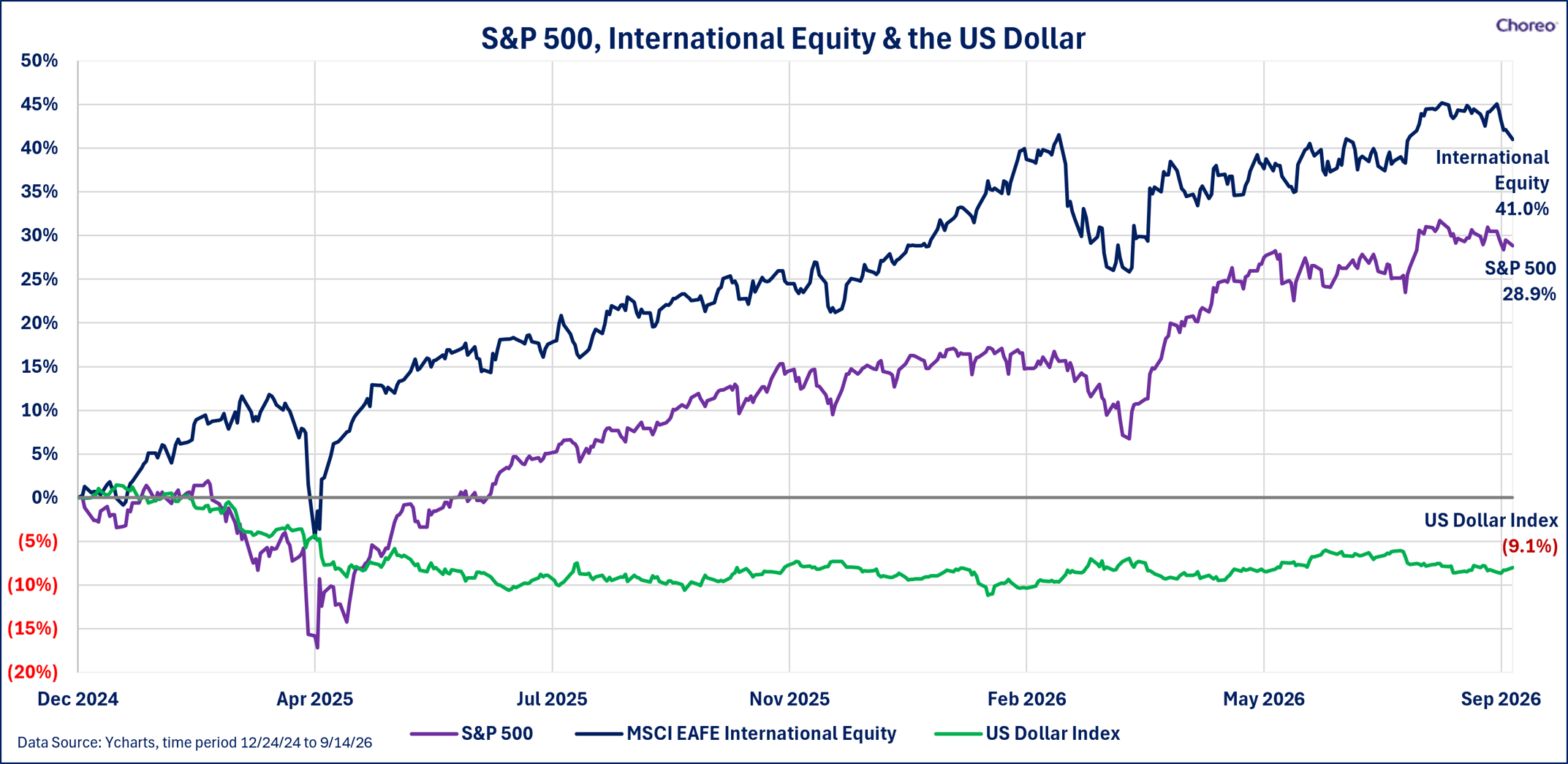
Global investors have seen some improvement over the last several years with international stocks outperforming the U.S. It is never certain “why” an asset performs a particular way but having a diversified basket can help smooth the ride for investors, as was the case for owning international stocks in recent years. To be clear, the U.S. is not the only nation in the world with elevated national debt levels, but enjoying the benefits of diversification can help mute outcomes even if certain nations struggle.
Conclusion
As Alexander Hamilton alludes to in the opening quote, debt can be a blessing, unless it becomes excessive. The trouble is that there is no exact definition of “excessive.” It likely depends on factors such as whether additional borrowing helps generate greater productivity over time. The $40 trillion debt milestone deserves attention and is certainly large by any measure, but it should not be treated as a standalone panic button. Growth has been exceptional and has thus far supported higher debt levels. Ongoing deficits are worth monitoring closely; however, the U.S. economy has continued to show strong resilience and growth through an extraordinary period of disruption. Global diversification has helped mute the impact of rising debt levels even further. Investors should neither ignore the debt problem nor allow it to crowd out the positives: innovation, productivity gains, household and corporate adaptability, and the continued depth of U.S. financial markets. Remaining diversified, emphasizing quality, and staying thoughtful about interest-rate exposure are critical considerations when building a long-term-focused portfolio. As always, please reach out to your Choreo advisor with any questions or comments.
Important Disclosures
Opinions are as of the date referenced and are based on sources considered reasonable by Choreo. Opinions are subject to change based on market or economic conditions. There is no guarantee that any of these expectations will become actual results.
Choreo, LLC is an investment adviser registered with the U.S. Securities and Exchange Commission (SEC). Registration as an investment adviser does not imply a certain level of skill or training of the adviser or its representatives. This document contains general information, may be based on authorities that are subject to change, and is not a substitute for professional advice or services. This document does not constitute audit, tax, consulting, business, financial, investment, insurance, legal or other professional advice, and you should consult a qualified professional advisor before taking any action based on the information herein. Information has been obtained from a variety of sources believed to be reliable though not independently verified. Choreo, LLC, its affiliates and related entities are not responsible for any loss resulting from or relating to reliance on this document by any person. Internal Revenue Service rules require us to inform you that this communication may be deemed a solicitation to provide tax services. This communication is being sent to individuals who have subscribed to receive it or who we believe would have an interest in the topics discussed. Past performance does not indicate future performance. The sole purpose of this document is to inform, and it is not intended to be an offer or solicitation to purchase or sell any security, or investment or service. Investments mentioned in this document may not be suitable for investors. Before making any investment, each investor should carefully consider the risks associated with the investment and make a determination based on the investor’s own particular circumstances, that the investment is consistent with the investor’s investment objectives.
All registered trademarks are intellectual property of Choreo, LLC. © 2026 Choreo, LLC. All Rights Reserved.